ERE's for charging infrastructure in the Netherlands · registration in the Energy for Transport Register (NEa)
The EU rewards your investment in charging infrastructure. We convert that reward to cash in your account.
Every kWh you supply to an electric vehicle — public, semi-public or private — helps to make transport in the Netherlands more sustainable. For this, you as the owner of charging infrastructure receive emission reduction units: ERE's. Fuel suppliers purchase these ERE's to meet their legal obligations. We handle the data collection, the registration in the Energy for Transport Register of the NEa, the verification, and the sale. You will see the proceeds appear in your account.
No upfront investment. No cure, no pay.
Charging energy from 2026 can still be registered until 1 March 2027
50+
charging squares in Belgium are already redeeming their certificates through us
inboeken over 2026 sluit over 157 Days 23 Hours 23 Minutes 21 Seconds
€ 10,800
net to your account at 100 MWh/year with a three-year contract 3Y
Why we exist
Our work is only done when every investor in charging infrastructure in the EU has gained access to that reward, and make the most of the reward by directly linking renewable electricity generation to the EV chargers.
Today, only a part of the eligible charging stations utilise the system. Not because it is not worthwhile, but because no one internally is taking up the file. Every year that is not booked in time is definitively lost income.
What does your charging station yield?
Fill in below what you know: the number of charging points, your annual consumption in kWh, or the number of kilometres your fleet drives electrically. You will immediately see what you net after an agreement of one, three, or five years.
You can also simulate what 100% renewable electricity, generated on your location, does to your yield.
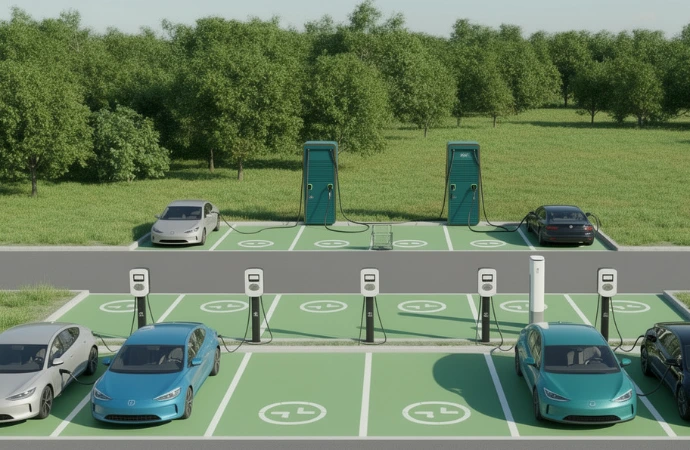
OPGELET: inboeken over 2026 sluit over 157 Days 23 Hours 23 Minutes 21 Seconds
Do you drive electrically? Then every kilometre earns money.
If your fleet charges on your own charging infrastructure, then every charged kilowatt-hour generates EREs. For a passenger car, this amounts to about € 27 per 1,000 driven kilometres. For heavy transport, it is much higher: an electric tractor that consumes 130 kWh per 100 km generates over € 17 per 100 km.
- One electric truck, 80,000 km per year: over € 11,300 net per year
- Fifty vans, each 30,000 km per year: over € 57,300 net per year
- One hundred company cars, each 25,000 km per year: over € 64,000 net per year
The larger your fleet, the smaller our share: our handling fee is capped at € 2,499 per year for a three-year agreement 3Y and € 1,999 for five years, only for our first 100 charging stations. With a million charged kWh, this means an effective handling fee of 1.9% instead of 20%.
Our process in four simple steps
1
Onboarding and registration
We assess your charging infrastructure against legal requirements and register your charging points via an authorisation for entry in the Register Energy for Transport (REV) of the NEa. You grant us access to your CPO or manufacturer platform.
2
Data extraction per quarter
We read your charging sessions directly from your CPO platform or the manufacturer's management system. At the source, audit-proof. You do not need to send us anything.
3
Compliance and reporting
We check the charging sessions for consistency, ensure the entry in the REV within the legal timeframe, and assist with the verification by the independent entry verifier.
4
Trading and payment
We bundle your EREs with those of dozens of other charging locations and sell them as one block to the fuel suppliers. More volume, a stronger negotiating position, a better price. We share the deal sheet at the time of payment, in full transparency.
Your effort: one signature and one read access.
That's it. You sign the authorisation for the entry with the NEa and grant us read access to your CPO platform. After that, you will hear from us every quarter, and via our platform, you can continuously track your EREs online.
- No new hardware, if your charging points are already MID metered.
- No new platform and no new software.
- No invoice from us, just a self-bill. We deduct our fee from the revenue.
Carrier-grade, no administration for you.
There is essentially a measurement and settlement problem: retrieving session records from various systems, valuing them correctly, and booking them on time against a deadline that allows no extension. At the same time, we ensure that our approach for your charging infrastructure has carrier-grade availability: better than 99.999% of the time available for your customers (the proverbial "five nines"). That is precisely the expertise we bring from the telecom world.
We read your data at the source from the CPO platform, not from a spreadsheet that you send us. Every kWh is traceable to a MID-certified measurement and holds up during verification. Charging energy from a calendar year must be booked by 1 March of the following year at the latest. Anything that comes in after that yields nothing more — so we never wait until the last day.
We bundle volumes and sell as one block instead of as separate files.
And we help you connect renewable generation to your chargers: electricity from your own solar panels with Guarantees of Origin counts for 100% instead of 50.5%, making the same MWh worth about twice as much (see our FAQ for more info).
Our deadline discipline
We read your charging sessions every quarter and have them continuously booked, well before the annual deadline of 1 March. Since our start, we have not missed a single declaration in Belgium.
Is your charging hub eligible?
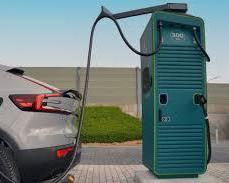
Public
Charging points that are accessible to all EV users. No minimum power required.
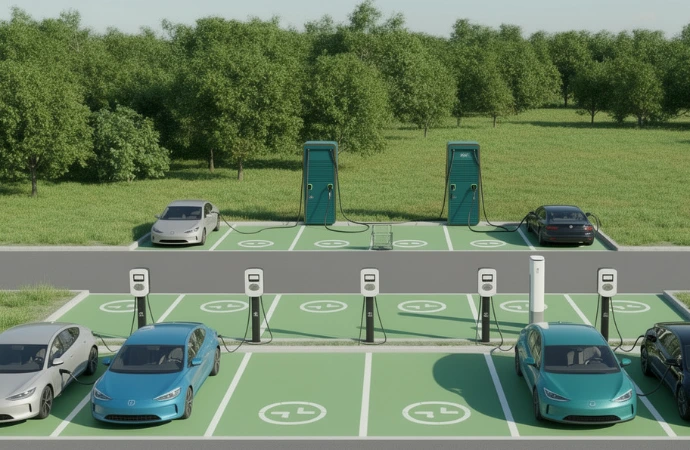
Semi-public
Charging points on private property that are accessible to third parties: business parks, retail, hospitality, hotels, etc. No minimum power required.
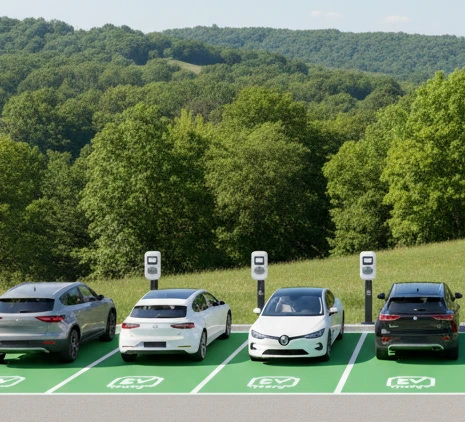
Privé
Charging points on a secured business site, for your own parking or customers. No minimum power required. (Also home chargers are eligible from 2026 on, we only focus on businesses for the moment.)
Each charging point must be metered using an integrated MID-certified meter, or via a dedicated connection or a secondary allocation point (MLOEA), and must automatically log its sessions via a CPO platform or the manufacturer’s management platform.